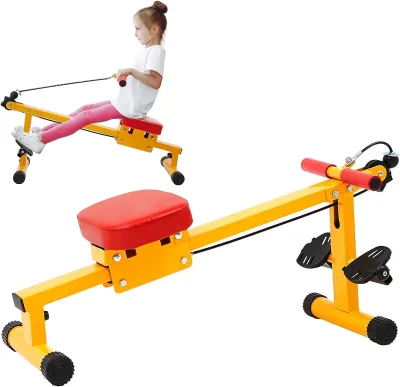
Source CE Certified Kid Rowing Machine for Home, Park, and School
Compare 30 CE certified kid rowing machines suitable for home, preschool, and community use. Buyers can evaluate models with steel construction, varying dimensions, and service lives up to 10 years to find the right aerobic equipment for children.
Key considerations
Products List


Comprehensive Sourcing Guide
CE Certified Kid Rowing Machine Sourcing Guide
Procuring fitness equipment for children requires a distinct approach compared to adult gear, as safety, durability, and ergonomic fit are paramount. The core keyword "ce certified kid rowing machine" signals a specific segment of the market where regulatory compliance and age-appropriate design intersect. Buyers must navigate a landscape where "kid" or "child" specifications often overlap with general aerobic equipment, requiring careful verification of target population claims. This guide provides evidence-based procurement strategies for sourcing these units, focusing on the technical, compliance, and commercial realities observed in current market listings.
The primary challenge in this category is distinguishing between marketing labels and actual product suitability. While many listings advertise "kid" or "children" applications, the underlying hardware often mirrors adult endurance machines with scaled-down dimensions. Sourcing success depends on verifying that the machine’s physical constraints—such as weight limits, stride length, and resistance mechanisms—are genuinely appropriate for younger users. This guide outlines how to validate these attributes against observed market data and trusted industry standards to ensure the final procurement meets both safety regulations and user needs.
Product Scope and Observed Listing Signals
Market analysis reveals a wide variance in how rowing machines are categorized for younger users. Observed listings show a price range of $25 to $550 USD, indicating a broad spectrum from basic, lightweight models to more robust, commercial-grade units. The minimum order quantity (MOQ) typically ranges from 1 to 100 units, suggesting flexibility for both small retailers and large institutional buyers. However, the term "kid" is not always a precise technical specification; many products labeled for children are actually general-purpose aerobic machines with dimensions that may or may not suit younger users. Buyers must scrutinize the "Application Age" and "Target Population" fields, which often list "Children" alongside "Adult" or "Normal Person," requiring careful filtering to find truly age-appropriate equipment.
Physical attributes observed in the market provide critical clues about suitability. Dimensions vary significantly, with some models measuring as small as 673297cm and others as large as 973223cm or 857585cm. These size variations directly impact usability for children, as a machine that is too large can be unsafe or ineffective for younger users. Additionally, the "Exercise Part" is frequently listed as "Leg" or "Leg, Arm," confirming the aerobic nature of the equipment. Buyers should prioritize models with "Small" or "Medium" dimensions and verify that the "Weight" capacity, often listed as ≤100kg, accommodates the intended user group without being excessively heavy for a child to manage.
Technical Specifications to Verify
When evaluating technical specifications, the material composition and structural integrity are primary concerns. Observed listings frequently cite "high quality steel" or simply "Steel" as the primary material, which is essential for durability in high-use environments like schools or community centers. The thickness of key components is often specified as 1.2mm or 1.5mm, a detail that buyers should verify to ensure the frame can withstand the dynamic forces of rowing without flexing or failing. It is crucial to confirm that the steel quality meets the demands of frequent use, especially since the "Service Life" is often estimated at 5-8 years, and some listings claim up to 10 years, indicating a focus on long-term reliability.
Ergonomic and functional specifications must align with the physical capabilities of children. The "Maximum Speed" is often listed as <15 km/h, which is a reasonable limit for home or light commercial use, but buyers should verify if the resistance mechanism allows for fine-tuning suitable for younger users. The "Folded" status is typically "Unfolded," meaning these are permanent or semi-permanent installations rather than portable units, which impacts storage and space planning. Additionally, the "Function" is described as "Multifunctional," suggesting the machine may engage multiple muscle groups, but buyers should confirm that the seat height, footrests, and handlebar reach are adjustable or sized appropriately for the "Application Age" of children.
Compliance and Safety Documentation
Regulatory compliance is non-negotiable for children’s fitness equipment. The "CE" certification is a frequent observation in listings, indicating conformity with health, safety, and environmental protection standards for products sold within the European Economic Area. However, buyers must verify that the CE marking is accompanied by a valid Declaration of Conformity and that the testing was performed on the specific model intended for children. Some listings also mention "GS" certification, which is a German safety mark often considered more rigorous than CE, providing an additional layer of assurance for safety-critical components. Buyers should request these documents to ensure the machine meets the specific safety requirements for children’s use, such as pinch-point protections and stability tests.
Beyond CE, other certifications may be present, such as "RoHS" and "ISO," which address environmental standards and quality management systems, respectively. While these are important for overall product quality, they do not replace the need for specific safety certifications related to children’s equipment. Buyers should also verify that the "Warranty" is clearly defined, with many listings offering a 1-year warranty, which is standard but may be insufficient for high-use environments. It is advisable to negotiate extended warranty terms or clear repair protocols, especially given the "Use Place" often includes "Family, Preschool, Park, Community, Square," where wear and tear are accelerated.
Cost Drivers and Commercial Terms
Pricing in this category is influenced by material quality, certification depth, and customization options. The observed price range of $25 to $550 USD reflects these variables, with lower prices typically corresponding to basic steel construction and standard certifications, while higher prices may include enhanced safety features, custom branding, or more robust warranties. Buyers should be aware that "Customized" logos and colors are often available, which can add to the cost but may be necessary for brand alignment in commercial settings. The "prod_packing" is typically "Carton" or "standard high quality export box," which affects shipping costs and potential damage during transit, so buyers should factor in packaging quality when evaluating total landed cost.
Commercial terms such as MOQ and lead times are critical for budgeting and inventory planning. With MOQs ranging from 1 to 100 units, small buyers can test the market with minimal risk, while larger buyers can leverage volume for better pricing. However, buyers should verify lead times, as these are not explicitly stated in the observed data but are crucial for supply chain planning. Additionally, the "Condition" is listed as "New," but buyers should confirm the manufacturing date to ensure the product is not old stock, which could affect material integrity, especially for plastic or rubber components. Clear payment terms and return policies should be established to mitigate risks associated with international shipping and customs clearance.
Supplier Qualification and Quality Control
Supplier qualification begins with verifying the origin and manufacturing capabilities. Most observed listings indicate a place of origin in "Zhejiang, China," with specific mentions of "Wenzhou," a hub for fitness equipment manufacturing. Buyers should assess the supplier’s production capacity and quality control processes, as these directly impact the consistency of the "high quality steel" and overall build. Requesting factory audits or third-party inspection reports can provide insights into the manufacturing environment and the supplier’s ability to maintain consistent quality across batches. Additionally, verifying the supplier’s experience with children’s equipment can help ensure they understand the specific safety and ergonomic requirements of this market segment.
Quality control should extend beyond the factory to include pre-shipment inspections. Buyers should specify acceptance criteria for key attributes such as "Dimension," "Weight," and "Certification" documents. Given the "Use Place" includes public spaces like "Park" and "Square," the equipment must withstand outdoor or high-traffic conditions. Buyers should request samples to test the "Service Life" claims and verify that the "Color" and "Logo" customization meet their specifications. Establishing a clear communication channel for addressing defects or discrepancies is essential, as is defining the process for handling non-conforming products, including returns or replacements.
Long-Term Procurement Checks
Long-term procurement success depends on monitoring product performance and supplier reliability over time. Buyers should track warranty claims and repair rates to assess the actual durability of the equipment, comparing observed "Service Life" claims of 5-8 years with real-world performance. This data can inform future purchasing decisions and help negotiate better terms with suppliers. Additionally, staying informed about changes in safety standards and certifications, such as updates to CE or GS requirements, is crucial to ensure ongoing compliance. Buyers should also consider the availability of spare parts, as the "Useful Life" of 8-10 years suggests a need for long-term maintenance support.
Finally, buyers should evaluate the supplier’s ability to innovate and adapt to market trends. As children’s fitness equipment evolves, suppliers may introduce new features or materials that enhance safety or usability. Maintaining a relationship with a supplier who can provide these updates ensures that the procurement strategy remains competitive and relevant. Regular reviews of supplier performance, including delivery times, product quality, and customer support, will help identify potential issues early and foster a partnership that supports long-term business goals. By focusing on these long-term checks, buyers can build a resilient supply chain that delivers value and safety for years to come.
FAQs
What certifications do the rowing machines have?
The rowing machines hold CE and GS certifications, with some models also featuring RoHS and ISO compliance. These certifications ensure the equipment meets international safety and quality standards for home and community use.
Can I customize the logo on the machine?
Yes, customized logos are available for these rowing machines. Buyers can request specific branding to be applied to the product, allowing for personalized marketing or corporate identification on the equipment.
What is the expected service life of the product?
The service life ranges from 5 to 8 years, with some models offering up to 10 years of useful life. This durability is supported by high-quality steel construction and a standard warranty of one year.
Which dimensions are available for the rowing machines?
Multiple dimensions are available, including sizes like 97*32*23cm and 85*75*85cm depending on the specific model. These compact designs fit well in family homes, preschools, parks, and community squares.
Where are these rowing machines manufactured?
The products originate from Zhejiang and Wenzhou in China. This location ensures access to established manufacturing capabilities for high-quality steel exercise equipment intended for aerobic leg and arm workouts.
What is the maximum weight capacity for users?
The maximum weight capacity is up to 100kg for these rowing machines. This specification makes them suitable for normal persons and children, ensuring safe and effective exercise within the stated limits.